

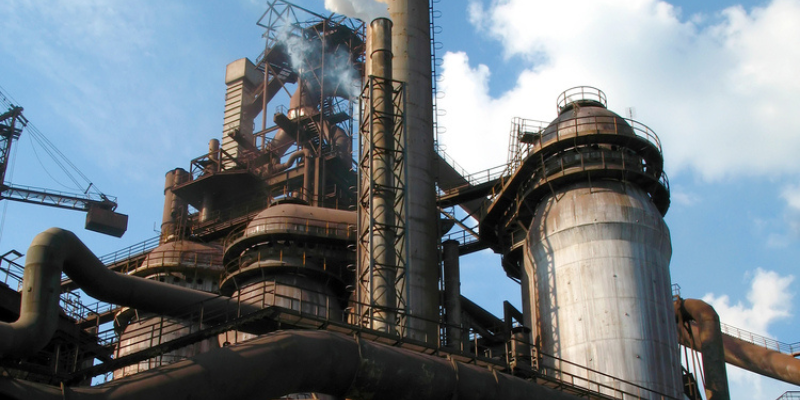
The industrial sector contributes more than 30% of global CO2 emissions and efforts to decrease these emissions have stalled. Ambitious CO2 reduction strategies in some regions, for example, the EU, are being offset by increased production in others, particularly Asia-Pacific, which have processes with higher carbon intensities and faster-growing economies. Many features can contribute to decreasing greenhouse gas (GHG) emissions from industry, such as electrification, use of renewable hydrogen, efficiency improvements, retrofitting of carbon capture and storage (CCS), or fundamental changes in manufacturing approaches. This report examines the role that sustainable biomass resources and wastes could play in helping to decarbonise the iron and steel (I&S) and cement sectors, which, combined, were responsible for 12% of global CO2 emissions in 2021. This includes biomass or biomass products supplying or supplementing process heat currently provided by coal, and in the case of I&S manufacturing, biomass products acting as a reducing agent and supplementing or substituting for coal or coke. The report considers the research, development and deployment (RD&D) status of the various opportunities for this substitution in I&S manufacturing with some case studies, including charcoal use in the smaller blast furnaces in Brazil and the development of ‘biocoal’ injection by AcelorMIttal at their plant in Torero, Belgium. Charcoal is not a perfect drop-in fuel to displace coal and coke and much of the research direction concerns maximising substitution rates without compromising on performance.
The report also examines the important role that biogenic sources can have in displacing coal use in cement manufacturing. This is already commercial, and uses of many alternative fuels, including biogenic wastes are steadily increasing, as are rates of substitution. A case study of cement production by Schwenk in Germany indicates how a substitution rate of >94% alternative fuels can be achieved. Some of the operational strategies and challenges of higher substitution rates are also presented.
The effectiveness and level of alternative fuel use are influenced by regional factors, such as policies and regulations that support effective management of waste streams. Some of the barriers and challenges facing industrial decarbonisation, both technical, environmental, social, and ethical, are summarised in the report. Socio-technoeconomic modelling and life cycle analysis are critical tools for assessing the benefits and risks of using biomass. The biomass supply chain itself must comply with sustainability criteria such that carbon savings are maximised, and undesirable ecological or social impacts are minimised. Policy mechanisms will be vital for accelerating the decarbonisation of hard-to-abate industries and will include direct funding, incentivising demand for more environmentally benign products, and border adjustment tariffs to prevent carbon leakage. Technology roadmaps for decarbonising both heavy industries include major roles for CCUS, renewable hydrogen and electrification and a smaller, but important role for biomass.
